A Semester ofLearning & Growth
A collection of work from my English 101 semester - the challenges, breakthroughs, and moments that shaped me as a writer.
About Me
I'm Brian. 36, podcast producer, product builder, web developer... and now college student? After 15 years learning on the job (co-founding Sickboy Podcast, running a production company, building AI products), I went back to school for Computer Science at University of Arizona. Studying online from Halifax, Nova Scotia. English 101 wasn't a class I expected to reshape how I think. But here we are.
Coming in, I thought I was good with words. I write scripts, break down ideas, argue points. But this course revealed a gap: the difference between getting information across and actually connecting with a reader. I now see two voices in my writing: casual podcast brain and strategic analytical mode. Good writing isn't about being clear. It's knowing where your reader might resist and shaping your words to get past that.
Also... I'm a web developer and designer, and building this portfolio site has honestly been my favourite assignment of the semester. When Issam said I could use my own coding framework instead of a standard format, I was way too excited. If you want to see more of my work, you're already on my site - lately.fyi. Feel free to poke around.
Beyond the Classroom
Life During the Semester
Learning doesn't happen in a vacuum. I thought it would be cool to include a few personal moments from my life during the semester. These moments capture what was actually going on in my life while I worked through all this. Click each card to read the story behind it.

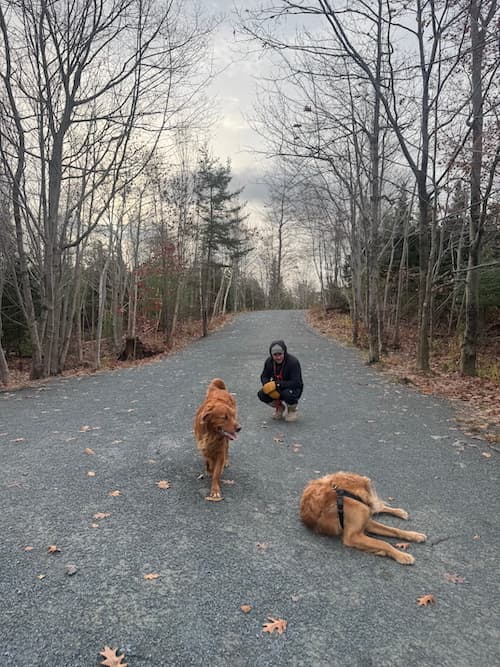

← Swipe to see more • Tap to flip →↑ Click each card to flip ↑
Introduction
My Learning Journey
Back in October, for our first discussion post, I wrote that good writing is "writing that can take the complex ideas in my brain and clearly communicate them so someone else can truly understand what I mean." I talked about language feeling like a narrow bandwidth... how hard it is to get thoughts out in a way that matches how they feel inside. I wanted to come out of this course "feeling more confident and intentional as a writer."
That definition still holds. But this semester added something to it. Good writing isn't just about clarity, it's about strategy. It's not enough to bridge the gap between minds. You have to anticipate where your reader might resist and build your argument to get past that. That's the shift this portfolio documents.
If Unit 1 was about digging inward to find a story, Unit 2 was about looking outward to see how stories are built. Genre Analysis showed me the formula behind professional credibility... headlines, subheadings, expert quotes, balanced slant. Changed how I consume and create media. The personal narrative pushed the other direction, forcing me to sit with vulnerability and put silence into words that could make a reader feel something.
The artifacts below represent that dual journey. Together, they tell the story of a Heavy Reviser learning to be more intentional. Someone who now sees writing as a series of deliberate choices, not just a way to get ideas across.
I selected five artifacts that capture different dimensions of this growth: 'From But to And' (Project #1) because writing about therapy forced me to translate internal experience into sensory, emotional language... my hardest challenge this semester. 'No Hype, Just Facts' (Project #2) to demonstrate how rhetorical analysis changed my understanding of persuasion and trust-building. Genre Analysis (Task 10.1) because it was my biggest breakthrough... seeing credibility as constructed, not inherent. Peer Review Reflection (Task 3.2) to show how my skepticism about collaborative feedback transformed into genuine appreciation. And Unit 2 Reflection (Task 13.2) because it captures the through-line of the semester: moving from 'clear writing' to 'strategic writing.'
Course Goals
What I Worked Toward
English 101 has five learning outcomes. Here's how I engaged with each one this semester... what clicked, what I struggled with, and where I actually grew.
Course Goal
Analyze a text's genre and how that influences reading and composing practices.
My Reflection
Task 10.1 was my biggest breakthrough. Deconstructing Harvard Gazette articles showed me that credibility is constructed... headlines, subheadings, expert quotes, balanced slant. It's a formula. Once I saw the architecture, I started noticing the same patterns in podcasts I produce, marketing copy I write. Changed how I read everything.
Selected Work
Portfolio
Artifacts
Five key works representing my growth this semester. Each artifact captures a different skill I developed — from personal narrative to rhetorical analysis.
"Language, I learned, does not just communicate emotional experience; it's what actively shapes it."— From "From 'But' to 'And'" (Project #1)
From 'But' to 'And': Personal Narrative
Task 7.3 - Final Draft
A personal narrative about therapy... the struggle to put emotions into words, and the moment my therapist suggested swapping 'but' for 'and.' Sensory details, internal monologue, and dialogue put readers in that room with me, sitting in silence.
Writing this forced me to face the gap between what I feel and what I can say. Personal narrative isn't reporting... it's making the reader feel the weight of silence, then the relief when something breaks through. Every sensory detail (the mechanical groan of the air conditioner, the whine of the refrigerator, my hands twisting in my lap) serves that one word change from 'but' to 'and.' The revision process taught me the most: my first draft told the story, but peer feedback pushed me to show instead of tell. Reviewers caught moments where I was describing feelings instead of letting readers feel them... exactly the kind of gap I couldn't see myself. This artifact represents Goal 5A (writing identity) because it made me realize how much I resist vulnerability in writing, and how powerful it becomes when I stop resisting.
No Hype, Just Facts: Rhetorical Analysis
Task 13.3 - Final Draft
Rhetorical analysis of Alvin Powell's Harvard Gazette article on AI in medicine. How does he build trust with skeptics? Institutional credibility, evidence-based logic, and a structure that handles objections before readers raise them.
This engaged a completely different part of my brain than the narrative... picking apart logic instead of wrestling with feelings. Analyzing Powell's Harvard Gazette article on AI in medicine taught me that trust is engineered, not assumed. His pro/con rhythm anticipates skepticism before readers can raise it. Harvard credentials and JAMA citations stack ethos and logos deliberately. The structure itself argues: objections are addressed, then dismantled. As a podcast producer who interviews experts weekly, I now recognize these same moves in my own work... and in every piece of professional media I consume. This artifact demonstrates Goals 1A and 1B (rhetorical awareness, audience/purpose) because it forced me to articulate why persuasion works, not just whether it does. Writing about rhetoric made me a more intentional rhetorician.
Deconstructing Trust: Genre Analysis
Task 10.1
Analyzing university science journalism... comparing Harvard Gazette articles to find patterns in structure, design, and language. Basically, finding the formula behind why certain writing feels authoritative.
Expected this to be dry academic busywork. Instead, it became my biggest breakthrough of the semester. Comparing Harvard Gazette articles side-by-side, I started noticing patterns: headlines that promise resolution, subheadings that guide without spoiling, expert quotes stacked strategically (researcher first, then practitioner for balance), and a subtle slant that reads as objectivity. Credibility, I realized, is constructed through consistent design choices... not inherent to the institution. This shifted how I consume all professional media: I now see news articles, podcast scripts, even marketing copy as deliberate rhetorical architecture. This artifact represents Goal 1A (genre analysis) because it gave me a framework for reading that I'll carry into every future writing situation. Once you see the formula, you can't unsee it.
From Skeptic to Believer: Peer Review Reflection
Task 3.2
How my view of peer review shifted... from useless 'good job!' experiences to understanding reviewers as actual readers, not pretend teachers.
I walked into this course skeptical of peer review. Past experiences felt like trading 'good job!' comments with strangers who barely read my work. Why would peer feedback matter when only the instructor grades? This reflection documents how that changed. The key insight: reviewers aren't pretend teachers... they're real readers. Their confusion is valid data. Their questions reveal gaps I can't see myself. The real growth came from giving feedback, not just receiving it. Reviewing others' drafts made me a sharper reader of my own work. Peer comments on my narrative caught moments where I was describing feelings instead of showing them... gaps I never would have spotted alone. This artifact represents Goals 4C and 4D (revision and collaboration) because it captures the moment peer review stopped feeling like a requirement and started feeling like how writing actually improves.
Unit 2 Reflection: From Inward to Outward
Task 13.2
Comparing analytical writing to personal narrative, revisiting my original definition of good writing. Written as a letter to myself at the start of the semester.
'If Unit 1 was about digging inward to find a story, Unit 2 was about looking outward to see how stories are built.' Writing this as a letter to my past self made the growth tangible. I could point to the exact moment my definition of good writing expanded... from 'clear communication' to 'strategic persuasion.' The reflection also surfaced something unexpected: using AI as a proofreader revealed how my casual podcast voice (words like 'honestly,' 'super effective,' 'kind of') weakens academic authority. I now see I have two writing modes, conversational and analytical, and I'm learning when to use each. This artifact represents Goal 5A (reflection and writing identity) because it captures the through-line of the entire semester: becoming a writer who makes deliberate choices rather than just getting ideas across.
Swipe or click to explore artifacts
Conclusion
Looking Forward
The biggest takeaway: good writing is strategic. Being clear isn't enough. You have to anticipate where your audience might push back and build your argument to handle it before they raise it. This has already changed how I approach scripts, docs, even emails. I see rhetoric everywhere now... can't unsee it.
Where I need to grow: voice switching. My casual podcast voice weakens academic authority (words like "honestly" or "super effective" just... keep sneaking in). I want to move between creative and analytical modes without losing myself in either. And I want to keep applying rhetorical analysis to my work. If I can pick apart how Harvard builds trust, I can build that same trust in what I create.
My plan moving forward: First, I'll build a 'filler word' checklist to flag during editing... those casual phrases that undermine credibility. Second, I'll practice reading drafts aloud to catch tonal inconsistencies between conversational and formal sections. Third, I want to apply the rhetorical analysis framework from this course to my podcast scripts and product copy, asking the same questions I asked of Powell's article: Who's the skeptic? What objection comes first? How do I build trust before I need it? English 101 gave me vocabulary and frameworks I didn't have before. Now I need to use them.
Brian Stever
English 101 • University of Arizona (Online) • Fall 2025
This portfolio was created as part of English 101 coursework.
Return to lately.fyi